Multiculture in Vancouver
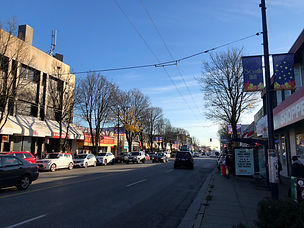
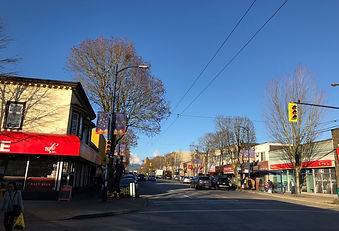
There are two places in Vancouver you can experience east Indian shopping or dining experience. One is at 49th Ave and Main Street and the other is 49th Ave and Fraser Street. Main Street is where the old Indian town was started, but due to high rent and a lack of parking, some shops were move to Fraser Street, where there is a mixture of east Indian, Chinese, and Japanese restaurants and free parking. Just like Chinatown, immigrants from the old world kept their tradition at the times they immigrated. If you want to experience authentic east Indian, Chinese dining or shopping experience frozen in the 1970's-1990's, Fraser and Main Street between 53rd Ave and 44th Ave are the places to go. For my own experience, each week after my running I would meet my running buddies at the cafe (Roots) between Main and 49th Street, but I never have a feeling that it resembles any east Indian shopping I experienced in Singapore or Fraser Street, or perhaps it is just me?
Gastown's most famous (though nowhere near oldest) landmark is the steam-powered clock on the corner of Cambie and Water Street. It was built in 1977 to cover a steam grate, part of Vancouver's distributed steam heating system, as a way to harness the steam and to prevent street people from sleeping on the spot in cold weather. Its original design was faulty and it had to be powered by electricity after a breakdown. It is within walking distance (about 20 minutes) without driving.
During summer on Friday, Saturday and Sunday there is a night open market in Chinatown which is also within walking distance (20 minutes walk) from downtown. 5 minutes ride by car. Used to be where Chinese immigrants lived before the 1960s, the old Chinatown is now famous of fusion cuisine and arts work as second and third generation Chinese are assimilated into the society and new immigrants wanted to shop in the new Chinatown (Richmond). Another tourist attraction in the old Chinatown is Dr. Sun Yat Sen Garden, a Chinese style garden which is famous for its idealized miniature landscape, and meant to express the harmony that should exist between man and nature, one of the highest forms of Chinese philosophies